Hinges, drawers and hardware: what you operate every day
The part of your kitchen that appears in no photo, and that you have in your hand every day.
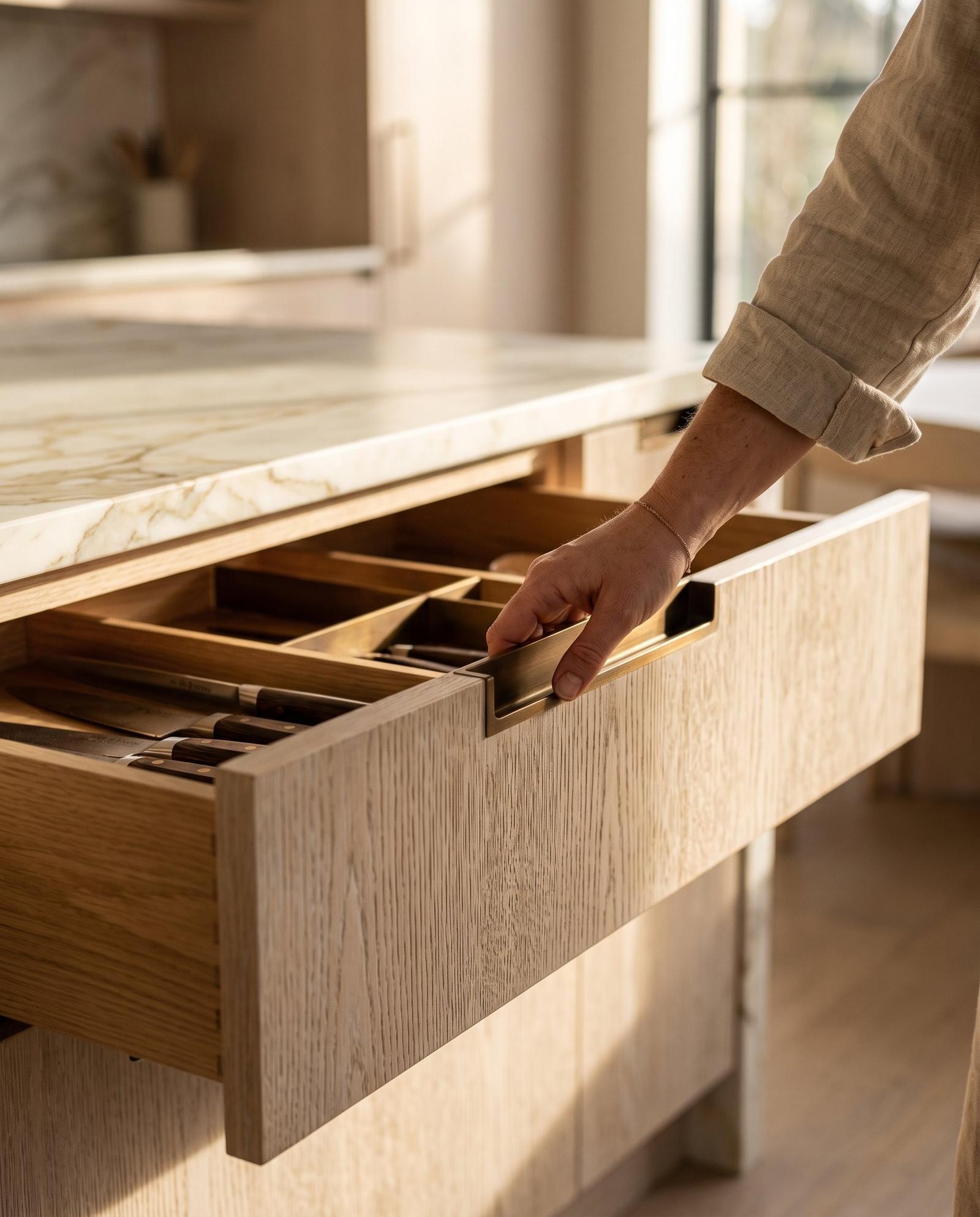
On a quote this often takes half a line. You then have it in your hand every day for twenty years.
The concealed hinge and its opening angle
Nearly every door hangs on a cup hinge: a round 35 mm cup in the front, bore depth about 11.5 mm, the same size across almost every brand and therefore replaceable without touching the front. Overlay puts the front in front of the side panel, half-overlay has two doors share one side panel, inset sets the door inside the carcass.
| Opening angle | What you need it for |
|---|---|
| 95 to 110 degrees | The standard, for an ordinary cabinet door |
| 155 degrees | As soon as an internal drawer or pull-out basket has to pass the door |
| 165 to 170 degrees | When the door has to fold right back against the cabinet |
| corner versions | In a corner unit, or where a wall is in the way of the door |
A door at 110 degrees opens far enough to look in, but not to pull out a full internal drawer. That is why such a drawer stays unused.
Two hinges, or four
The number follows from the height, width, thickness and material of the door, and so from its weight; every manufacturer has a table for it. The question is not how many there are, but whether that number was calculated for the weight of your fronts. Good hardware also adjusts in three directions.
Soft close and push to open
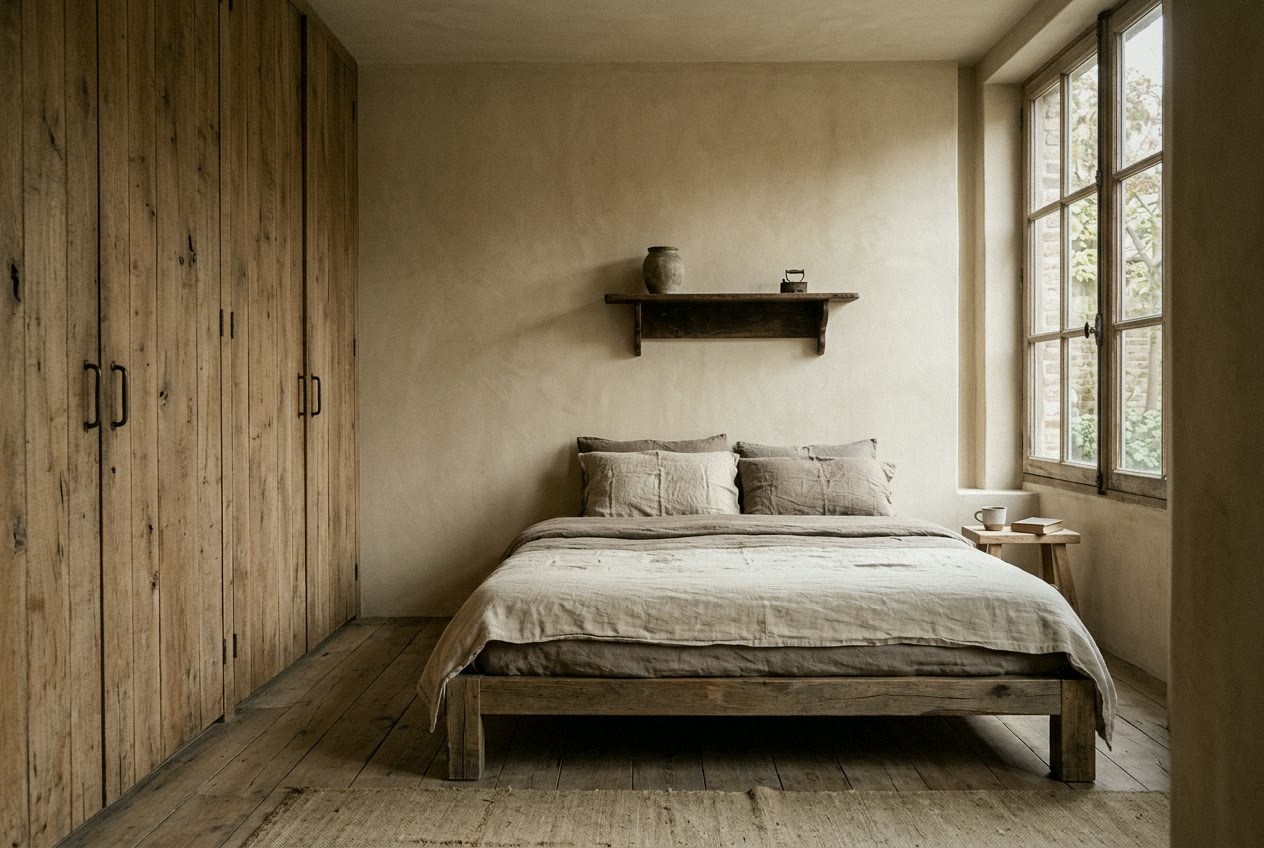
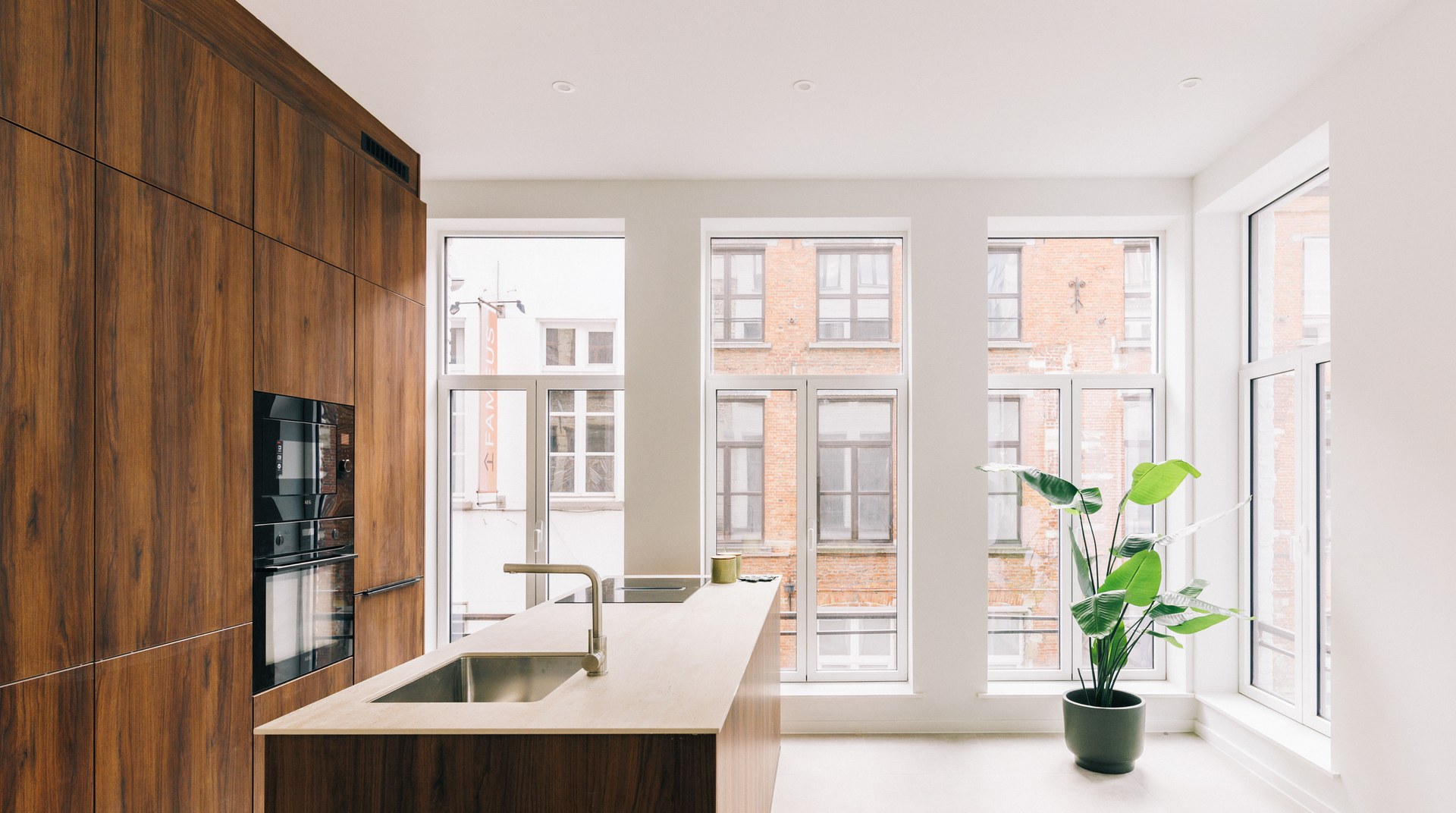
Soft closing does everything in the last centimetres: the door is slowed and pulls itself shut. Push to open does the opposite when you press the front, and needs a joint of about 2.5 mm all round. That joint is also the design.
Versions exist that combine opening and soft closing; without that combination you gain the handle-free look and lose the soft close. The drawback: on a dark matt lacquer you see where you push.
The runner underneath is the whole story
Of a drawer you see the front. What it is worth sits underneath.
| Runner type | Extension | Where you meet it |
|---|---|---|
| Roller runner under the drawer | Partial | Light cabinetry, low loads |
| Ball-bearing runner against the side panel | Full, runner visible | Office and technical furniture |
| Concealed undermount runner | Full, nothing visible | Kitchen and bespoke cabinetry |
| Property | Dimension |
|---|---|
| Load class | 40 kg or 70 kg, drawer plus contents |
| Nominal lengths at 40 kg | 270 to 600 mm |
| Nominal lengths at 70 kg | 450 to 650 mm |
| Side panel heights | 66.5 / 90.5 / 128.5 / 177 / 241 mm |
Dimensions of the box system we build with. You want the highest sides under a hob. A cutlery drawer never reaches 40 kg, a wide larder drawer does.
Why this only makes the difference later
Blum tests its hinges over 200,000 opening and closing cycles. In a kitchen, across twenty years, something opens and closes more than eighty times a day, and it does not wear evenly: it starts with the drawer under the hob and the bin drawer.
Six questions that make a quote speak
- Which brand of hardware, and which load class are the drawers?
- Is the number of hinges calculated for the weight of my fronts?
- Does everything close soft, or only the doors?
- Which opening angle is fitted on the cabinets with internal drawers?
- Can the hinges be adjusted without tools?
- What happens if a runner fails in five years?
With us soft-close Blum hinges and drawers are the starting point and not a surcharge. What else comes as standard is on bespoke kitchens in Antwerp and on bespoke wardrobes and cabinet walls. What that gives in an installed kitchen you can see under the projects, with the price of each kitchen.
About these figures
Opening angles, load ratings and extension lengths differ by manufacturer and by range; your fitter reads the right value off the data sheet of the hardware being installed.
Torn between a handle and handleless?
Briefly tell us what material you have in mind for the fronts and how tall and wide they will be. We will say which hardware suits, whether push to open is wise on that material, and where a heavier load class is better.
Phone +32 3 318 74 56, also on WhatsApp.
Email hello@cervano.be
Further reading
- Standard kitchen dimensions, and when they pinchThe dimensions almost every kitchen drawing starts from, and the places where they stop working in a real room.
- Choosing worktops and splashbacksWhat each material tolerates, which thicknesses are common, and where the joint falls.
- All articles in the knowledge baseWhat you should know before you sign, with the measurements and the figures.